You can filter by cuisine, by price, even by whether they welcome your dog. Just not by whether they welcome Disabled people.
Picture booking a table at one of the capital's most talked-about restaurants. You open a city guide and filter by cuisine, by neighbourhood, by price. You can even check the latest curated list to find a spot that welcomes your dog.
Now picture trying to find out whether you can physically get through the front door. If you are a wheelchair user, or have other access needs, the guide goes quiet.
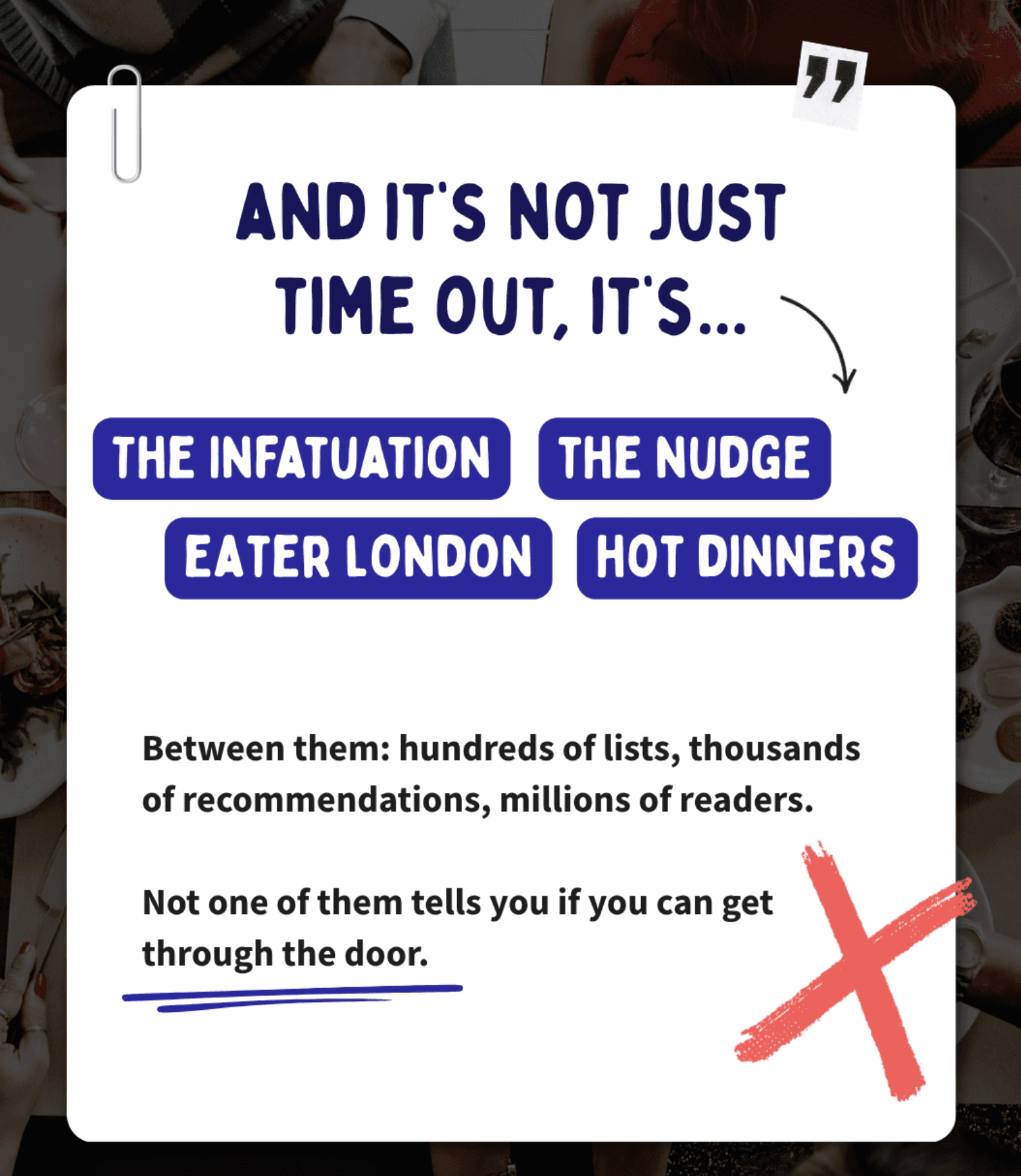
For Disability Pride Month, we looked at how the UK's biggest food publishers handle access information. The pattern is consistent: the busiest, best-resourced restaurant guides in the country treat it as something readers will sort out for themselves. When the guides leave it out, the work of finding and verifying access falls entirely on Disabled people, every time, for every booking.
At Sociability, our work is mapping detailed, verified access information for venues across the UK: step-free entry, accessible toilets, seating, the specifics a Disabled diner actually needs before they leave the house. To see how the major food guides compare, we put their biggest lists to the test.
50 restaurants, 0 with accessibility information
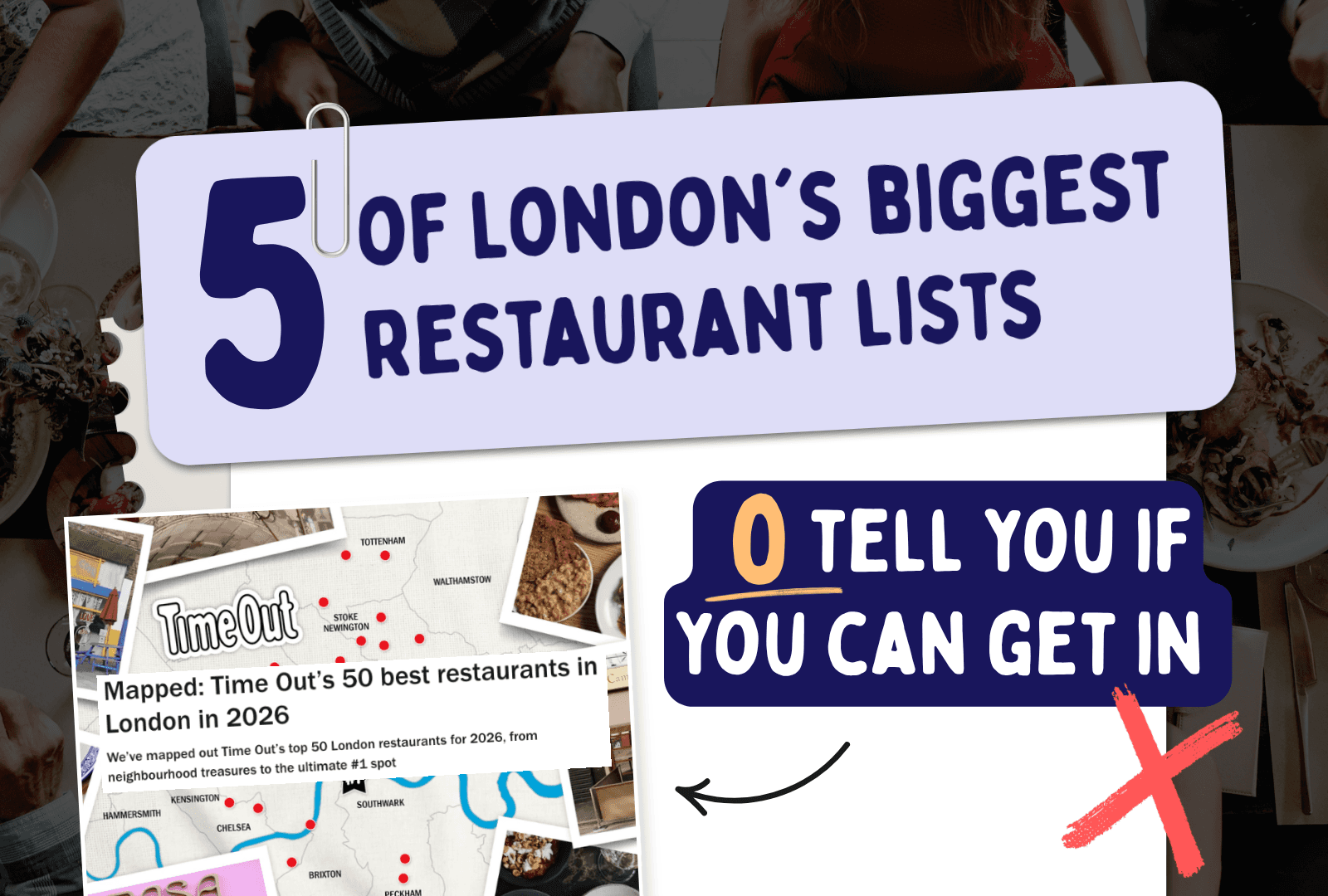
We audited Time Out's Best London Restaurants 2026 map, one of the most widely read restaurant lists in the country, and checked each of the 50 venues for published access information: on the guide itself, on the restaurants' own sites, and on booking platforms. The results:
0 of the 50 entries on Time Out's list include any access information.
1 venue (Simpson's in the Strand) publishes clear, specific access details on its own website.
1 venue (The Yellow Bittern) has no website at all, so its layout is impossible to research online before visiting.
The list will tell you the price, the atmosphere and the dish to order. It will not tell you whether Disabled people and their different access needs can actually enter the building.
The dog-friendly double standard
The usual defence is that access information is too hard to keep current. Looking at how often these publishers update their other lists, that does not hold up.
Take The Infatuation. Its dog-friendly London guide was last updated in September 2024. Its accessible restaurants guide was compiled in 2020 and has only just been updated in the last few weeks, despite a banner promising it is kept current. It still recommends venues that have since closed. A Disabled diner who trusted it could plan an evening at a restaurant that no longer exists.
Hot Dinners follows the same shape: a regularly maintained dog-friendly list, and no equivalent for access at all.
When a publisher keeps its dog-friendly listings current but lets its access list go years out of date, that is a decision about priorities, not a limit on resources.
Guide | Last substantial update | Status |
|---|---|---|
The Infatuation (dog-friendly guide) | September 2024 | Up to date |
The Infatuation (accessibility guide) | 2020 | Out of date, lists closed venues |
Time Out (top 50 restaurants) | June 2026 | No access information |
Why the detail matters
Access is not a yes or no box, and a single "accessible" tag rarely tells you what you need to know. Getting in is one part of it. So are step-free routes to the toilet, seating you can actually use, and sensory considerations. A tag that says "accessible" can hide an internal step, an upstairs dining room, or a toilet you cannot reach.
The language matters too. Time Out's review of Normah's, inside Queensway Market, calls the restaurant "accessible", but means culturally welcoming and affordable rather than physically step-free. The market's own access considerations go unmentioned.
Simpson's in the Strand shows how little effort it takes to do this properly. Its own site sets out exactly which rooms are step-free and which are not:
"The Grand Divan is accessible from the street for wheelchair users. There is no step-free access to the Assembly Room, Romano's, Simpson's Bar, or Nellie's Tavern."
That single paragraph tells a Disabled diner more than any of the guides manage across 50 venues. It also shows why specifics beat a binary tag: even a venue marked "accessible" may only be partly so, and a diner deserves to know that before they arrive.
If it's invisible in London, it's invisible everywhere
London is the most heavily reviewed dining city in the country, covered by brands backed by large global platforms. If access is an afterthought for the best-resourced publishers covering the most-reviewed city, it is almost certainly worse everywhere else in the UK.
This is not a niche request. It is basic information, the kind the same publishers already gather and maintain for far less essential things.
Get involved
This is about practical change that helps Disabled people, not a one-off list posted for Disability Pride Month and forgotten. The fastest way that information becomes standard is for the people who use these venues to start putting it on the record.
If you read this and do one thing, make it this: get involved. That looks like two simple habits.
Ask about access when you book. Every time someone asks, it tells a venue, and the guides who cover them, that this information is expected. Demand is what gets it onto the template. For example, when you pay for the bill, ask the waiter how a Disabled person could find out about the access of the venue
Add photos of the places you visit in the Sociability app, so the next person does not have to phone ahead and hope. A review with access information in it is worth more to a Disabled diner than any "best of" list.
Do you own a venue?
If you’re a venue owner, then you can Claim My Business on Sociability app. Add your own photos and updates to help Disabled people find your venue and feel welcome.
You do not need to be Disabled to do either. Anyone who eats out can take photos and ask about the accessibility, note whether there were steps at the door, whether the toilet was reachable, whether there was room to move. That is how the gap gets filled.
What we are asking publishers for
The guides could close most of this gap tomorrow.
Add an access filter to your search and listings.
Build a few access basics into your standard review template, the same way you note price and booking details.
Link to access data that already exists rather than starting from scratch. Publishers can pull Sociability's verified accessibility data straight into their listings, so readers get accurate access information without anyone reinventing it.
Exclusivity is having a moment in London dining. It should never mean leaving people at the door. So the next time a guide posts its "hottest tables" list, ask the obvious question in the comments: which of these can a wheelchair user actually get into? And then go and log the answer for somewhere you have been.
FAQ
Which London restaurant guides include accessibility information?
Very few. In our audit of Time Out's top 50 London restaurants, none of the listings included access information. The Infatuation and Time Out have each published a one-off accessibility list, but both are years old and one still lists closed venues. Most major guides, including Eater London and Hot Dinners, offer no access information or filter at all.
Are London restaurants wheelchair accessible?
It varies hugely, and the bigger problem is that it is hard to find out in advance. Many venues publish nothing about step-free entry, accessible toilets or usable seating, which leaves Disabled diners phoning ahead or arriving without knowing. Even venues tagged "accessible" may only be partly so.
How can I find accessible restaurants in London?
The most reliable source is verified access information logged by people who have actually visited. Sociability maps detailed access data for venues across the UK, from step-free entry to accessible toilets, which stays more current than editorial lists that can sit not updated for years. For a specific restaurant, the venue's own website is worth checking too, though many still publish nothing.
Why don't most restaurant guides include access information?
Publishers often say it is too hard to keep current. But many maintain frequently updated dog-friendly lists while leaving access lists to go years out of date, which suggests it is a question of priorities rather than resources.

Georgina Grogan
Georgina is the Community Engagement Officer at Sociability. Bringing 12 years of lived experience as a Disabled content creator, she handles SEO and blog writing to successfully build and engage our community