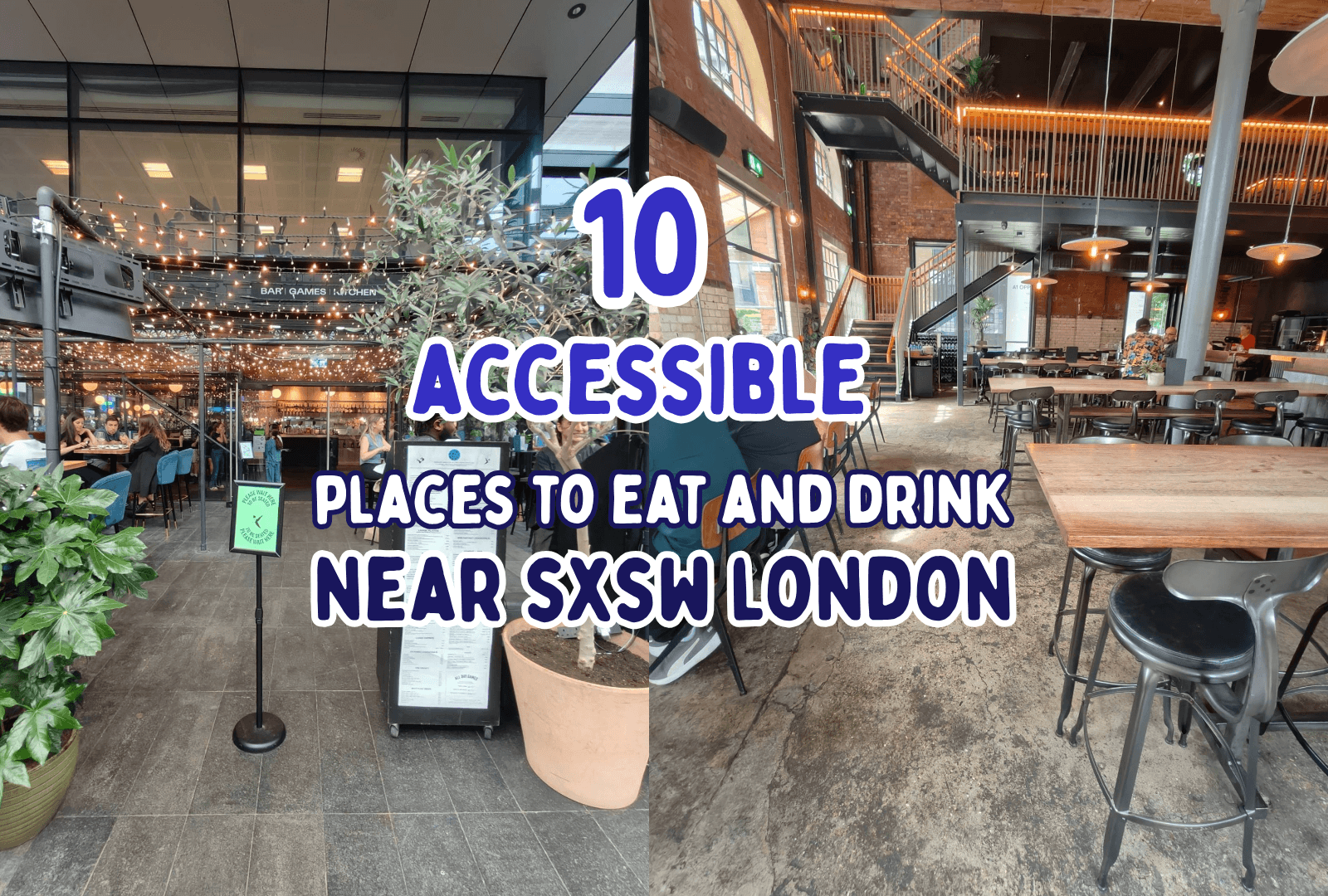
Finding somewhere good to eat in London should be the fun part of planning a day out. But if you use a wheelchair, finding a wheelchair accessible restaurant you actually want to visit is often only half the job.
Is there step-free access? Is the entrance genuinely level, or is there a small step nobody thought worth mentioning? Is there an accessible toilet? Can you actually get to it once you're inside? Is there enough space between the tables for a wheelchair?
Searching for wheelchair accessible restaurants in London can quickly turn into opening ten tabs, scrolling through photographs, checking Google reviews and eventually ringing the restaurant yourself.
That’s exactly the problem Sociability is designed to solve.
The free Sociability app brings detailed accessibility information and photos together in one place, helping you check whether a restaurant meets your individual access needs before you visit.
What does "wheelchair accessible" actually mean?
One of the biggest problems when searching for accessible restaurants in London is that the word "accessible" can mean completely different things depending on the person using it.
A restaurant might describe itself as wheelchair accessible because it has a step-free entrance, but that doesn't necessarily mean it has:
An accessible toilet
Enough space between tables
Step-free access throughout the venue
A suitable lift between floors
Accessible outdoor seating
A lowered bar or service counter
Space for a larger power wheelchair
Somewhere comfortable to position a wheelchair at the table
And, of course, not every wheelchair user has the same access needs.
Some people need completely step-free access, while ambulatory wheelchair users may have different access needs depending on when and how they use their wheelchair. A small step may be a complete barrier for some wheelchair users, while others may be able to navigate it depending on their access needs.
A small step may be a complete barrier for some wheelchair users, while others may be able to navigate it depending on their access needs.
That's why detailed accessibility information is much more useful than a simple yes or no accessibility label.
Sociability focuses on the individual features of a venue so you can decide for yourself whether somewhere works for you.
What to check before booking
Before you commit to a restaurant, it helps to work through the same access questions each time. Here's what to check and why each one matters.
What to check | Why it matters | Question to ask |
|---|---|---|
Entrance | A step-free entrance symbol doesn't always mean level access | Is there step-free access from the pavement to the restaurant? |
Accessible toilet | Having an accessible toilet doesn’t guarantee it's usable or on the same floor | Do you have an accessible toilet on the same floor? |
Table space | Tight spacing can create an access barrier once inside | Is there space for a wheelchair user at the table? |
Internal level changes | A venue can be step-free at the door but not throughout | Are there any steps between the entrance and the dining area? |
Door type | Heavy manual doors can create an access barrier | Is the entrance door automatic or manual? |
Branch-specific access | Chain restaurants vary hugely by location | Check the specific venue, not the chain in general |
The good news is that you don't necessarily need to ask all of these questions yourself. Sociability listings are designed to bring this kind of detailed information together before you visit.
Search Sociability before you visit
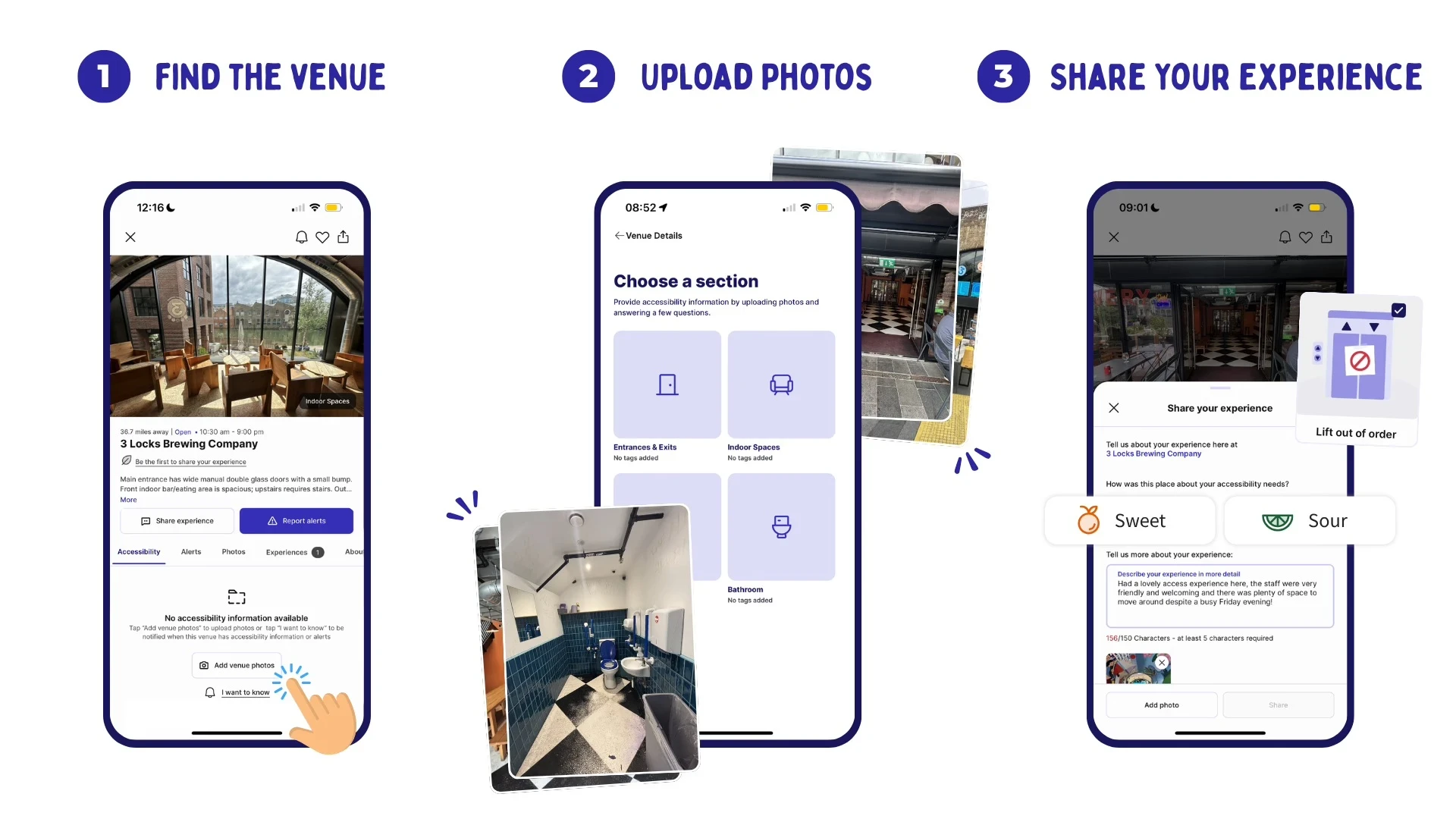
One of the easiest ways to find wheelchair accessible restaurants in London is to search the Sociability app.
Sociability contains detailed accessibility information for places across London and the rest of the UK, including cafés, restaurants, bars and other venues.
Rather than simply labelling somewhere "accessible", you can look at the individual features that matter to you.
For example, you might want to check:
Whether the entrance is step-free
The type of door at the entrance
Whether there is an accessible toilet
Internal steps or level changes
Seating and table information
Lift access
Photographs of the venue and its accessibility features
This means you can make your own decision about whether a restaurant meets your access needs rather than relying on somebody else's definition of accessibility.
You can also add places and accessibility information yourself, helping other Disabled people plan future visits.
Search for the specific restaurant, not just the chain
If you've already found a restaurant you want to visit, search for the specific venue on Sociability before booking.
This is particularly important with restaurant chains.
Just because you've visited an accessible branch of a restaurant before doesn't mean another London location will have exactly the same access.
London buildings vary enormously. One branch might be inside a modern shopping centre with level access and an accessible toilet, while another could be in an older building with steps at the entrance.
Treat every location individually and check the accessibility information for the exact branch you're planning to visit.
Check the entrance and step-free access
If you need step-free access, look for specific information about the entrance rather than simply looking for the wheelchair accessibility symbol.
On Sociability, look for details and photos showing things such as:
Whether the entrance is completely level
Whether there is a ramp
Whether a portable ramp is available on request
The width of the entrance
Whether there are heavy or automatic doors
Whether there is an alternative accessible entrance
Portable ramps may work well for some wheelchair users, but their suitability can depend on factors such as the gradient, width, weight limit and the wheelchair being used.
Again, knowing what is actually available lets you decide.
Don't forget the accessible toilet
For many Disabled people, an accessible toilet can be just as important as step-free access.
Before booking a restaurant, check its Sociability listing to see whether there is an accessible toilet and what information is available about it.
A venue can technically have an accessible toilet while still having barriers that make it difficult for some people to use.
For example, you may want to know:
Is it on the same floor as the restaurant?
Is there step-free access to it?
What is the doorway width?
Is the room being used for storage?
What transfer space is available?
Does it require a RADAR key?
Are there grab rails?
If you're going to be spending several hours somewhere, this information can make the difference between being able to relax and constantly wondering whether you'll be able to use the facilities.
Look at accessibility photos
Photos are one of the most useful ways to understand access before visiting somewhere.
Sociability listings can include photos of a venue and its accessibility features, helping you see details that are difficult to communicate with a simple "accessible" label.
Useful photos might show:
The front entrance
Pavement and kerb access
Tables and seating
Space between tables
Stairs and level changes
Doorways
Accessible toilets
Outdoor seating areas
If the information you need isn't available on Sociability yet, Google Maps, restaurant websites, social media and other user-uploaded photographs can provide additional clues.
But be cautious about relying on photographs alone.
A photograph might make an entrance look level when there's actually a small threshold, or show an accessible toilet without revealing that there are steps on the route to reach it.
Photos are most useful alongside detailed access information, which is what you’ll find on the Sociability app.
Contact the restaurant if you're unsure
Sometimes the accessibility information you need simply isn't available yet.
If you've checked Sociability and still have a question, contacting the restaurant before you travel can help fill in the gaps.
Rather than asking “Are you wheelchair accessible?”, ask exactly what you need to know.
For example:
"Is there step-free access from the pavement to the restaurant?"
"Do you have an accessible toilet on the same floor?"
"Is there space for someone to remain in their wheelchair at the table?"
"Are there any steps between the entrance and the dining area?"
Specific questions are much more likely to get useful answers.
And if a restaurant doesn't have its accessibility information easily available, tell them.
Venues can add or update their accessibility information on Sociability, and they should also make clear, detailed access information easy to find on their own website.
Disabled customers shouldn't have to call or email every time they want to find out whether they can get through the door.
Think about the journey as well as the restaurant
Finding an accessible restaurant is only one part of planning an accessible day out in London.
You'll also need to consider how you're getting there.
Depending on your access needs, this might include checking:
Lift availability
Accessible bus routes
Blue Badge parking and any local restrictions, particularly in central London
Drop-off points
Distance from the nearest station
Pavement conditions and crossings
A brilliant accessible restaurant isn't particularly useful if the route from your transport to the front door doesn't meet your access needs, whether that's the Tube or a wheelchair accessible black cab.
When choosing between several restaurants, location and transport links can therefore be just as important as what's inside.

Read more about how to add information to the Sociability app.
Find a backup option on Sociability
Accessibility information can change.
Lifts break. Accessible toilets occasionally become unavailable. Building work can affect entrances. Restaurants can change their layouts.
If you're travelling a long distance or planning something important, it can be useful to have another option nearby.
Search Sociability for other cafés, restaurants and bars around the area before you travel so you already know what alternatives are available and can compare the accessibility features that matter to you.
This is particularly useful in central London, where you'll often have several places within a relatively small area.
Our guides to wheelchair accessible Michelin star restaurants in London and wheelchair accessible hotel bars in London are also a good place to start if you want a shortlist already narrowed down.
What if the restaurant isn't on Sociability yet?
If you visit somewhere that isn't on the Sociability app yet, you can help change that.
You can add the place yourself, upload a few photos and share useful accessibility information about what you found.
That might include the entrance, accessible toilet, seating, internal steps or anything else that could help another Disabled person decide whether the venue meets their access needs.
Every contribution helps make detailed accessibility information easier for the next person to find.
Frequently asked questions
How do I find wheelchair accessible restaurants in London?
Search the free Sociability app for detailed accessibility information about restaurants across London. You can check specific features such as step-free entrances, accessible toilets, seating, doors and internal level changes rather than relying on a general "accessible" label.
Does a step-free entrance mean the whole restaurant is accessible?
Not necessarily. A restaurant can have step-free entry but still have internal steps, a toilet that isn't step-free, or seating areas that are difficult to reach in a wheelchair. Check the full accessibility information for the venue before you visit.
Are all branches of the same restaurant chain equally accessible?
No. Access can vary considerably between branches depending on the building, so search for the specific location on Sociability rather than assuming its access will match a branch you've visited before.
What questions should I ask a restaurant about accessibility?
If the information you need isn't available on Sociability, ask specific questions rather than a general one. For example, ask whether there's step-free access from the pavement, whether the accessible toilet is on the same floor, and whether there's space to remain in your wheelchair at the table.
What should I do if a restaurant isn't listed on Sociability?
If you visit somewhere that isn't listed yet, you can add the venue yourself and upload photos and accessibility information to help other Disabled people planning a visit.
You can also encourage the restaurant to make its own accessibility information easier to find and keep it up to date.
Should I have a backup restaurant in mind?
Yes. Accessibility features can change unexpectedly, such as a lift breaking or a toilet becoming temporarily unavailable. Searching Sociability for another accessible option nearby before you travel can help avoid a wasted trip.
Does getting to the restaurant matter as much as the restaurant itself?
Yes. Checking step-free transport options, Blue Badge parking, drop-off points and the route to the entrance can be just as important as checking the restaurant itself.
Help make accessibility information easier to find
Disabled people shouldn't have to become detectives every time they want to go out for dinner.
The more detailed accessibility information that's available, the easier it becomes for people to make informed decisions about where they want to spend their time and money.
You can use the free Sociability app to discover detailed accessibility information for restaurants, cafés, bars and other places across London.
And if somewhere you visit isn't listed yet, or information is missing, you can add the place, upload a few photos and share accessibility details with the community.
Because finding somewhere to eat should start with deciding what food you're in the mood for, not wondering whether you'll be able to get through the door.

Georgina Grogan
Georgina is the Community Engagement Officer at Sociability. Bringing 12 years of lived experience as a Disabled content creator, she handles SEO and blog writing to successfully build and engage our community