Could the language we use be creating more barriers than the physical environments around us? Language is a powerful tool. It shapes how we perceive others and how we build our communities. For a long time, the phrase special needs has been the standard term in schools, healthcare, and government policy.
However, as we move through 2026, the conversation is shifting. Many people are questioning why we use this term and whether it is time to retire it in favour of more direct, empowering language.
The Origin of Special Needs in the UK
In the UK, the term special needs is deeply ingrained in our culture, primarily through the SEND (Special Educational Needs and Disabilities) framework. This system was designed to identify children who require extra support with learning, communication, or physical mobility.
According to the UK government, SEND covers a broad spectrum. It includes children who struggle with reading and writing, such as those with dyslexia, or those who find concentration difficult, such as people with ADHD. It also covers physical disabilities and sensory impairments. While the intention behind the term was to ensure support was provided, it has inadvertently created a sense of "othering" for the 16 million disabled people living in the UK.
Is Needing Support Really Special?
Last month, Sociability posted this very question on Instagram. We asked our followers: what does having special needs actually mean to you? The response was overwhelming. The consensus was that while everyone requires certain things to thrive, whether that is a desk at the right height, a quiet room to work in, or captions on a video, only disabled people have their needs labelled as "special."
The term implies that these requirements are an optional extra or a burden on society. In reality, these are simply human needs. A ramp is no more "special" than a set of stairs; both are simply tools to help people move from one level to another. By labelling these needs as special, we suggest that the person is asking for something "extra" rather than something equal.
Insights from the Sociability Community
When we opened the floor to our followers, the feedback highlighted how the term affects mental health and self-perception. One follower noted that the phrase adds to the idea that disabled people are more effort to accommodate, which leads to stigma. They pointed out that our needs aren't special; they are just needs.
Another community member shared their experience of growing up in the 80s and 90s, where the term was often used as a playground insult. This historical baggage makes many people feel uncomfortable with the phrase today. It is also interesting to note the linguistic divide between life stages. In a professional work setting, we talk about "reasonable adjustments" or "workplace accommodations," yet in education, we revert to "special needs." Why the shift?
The Social Model of Disability vs. The Medical Model
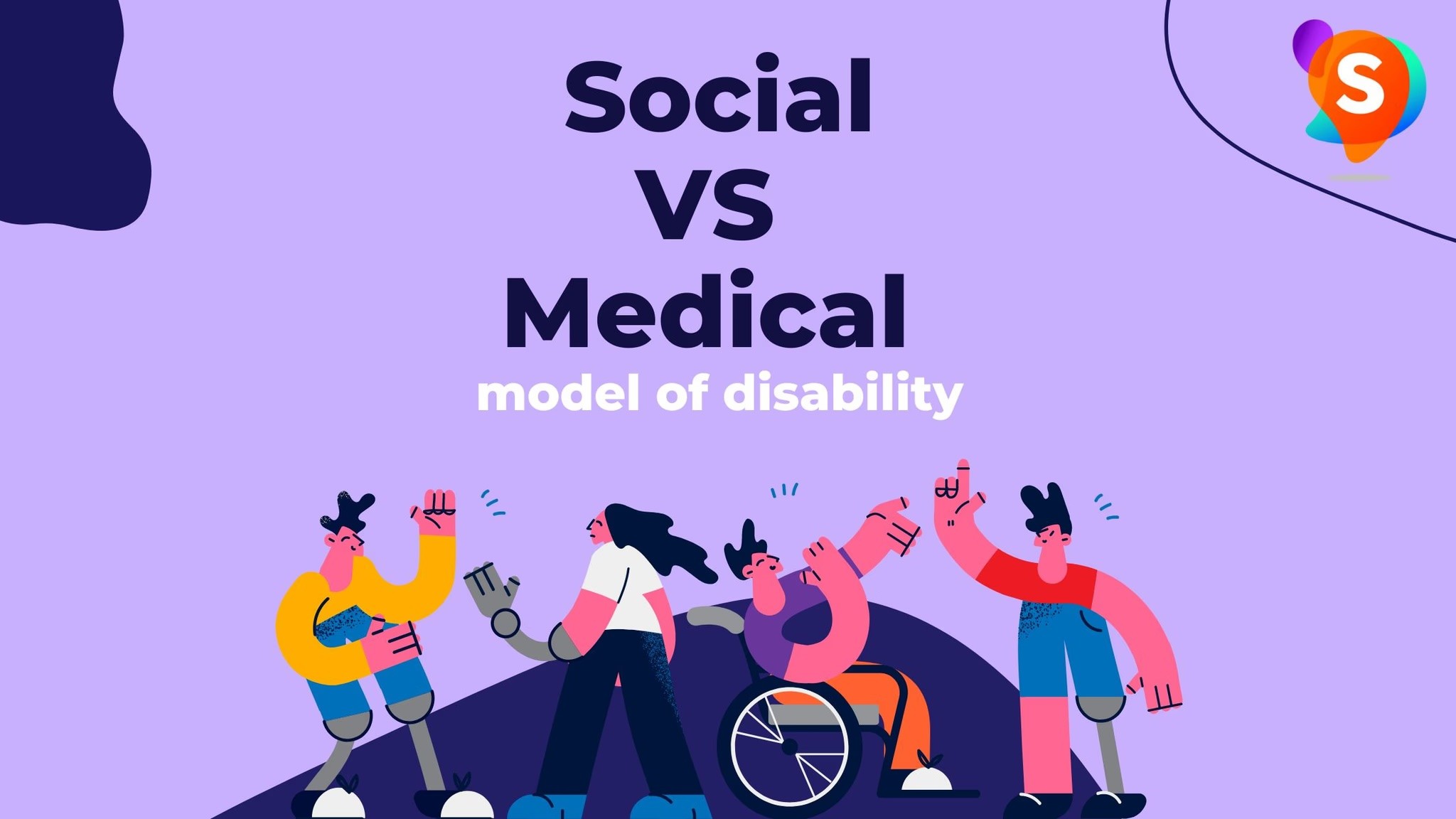
To understand why the term is outdated, we have to look at how we view disability with the social model vs the medical model of disability.
The Medical Model: This view suggests that the "problem" lies within the person’s body or mind. It focuses on "fixing" the individual to fit into society. Terms like special needs often align with this model.
The Social Model: This view, which Sociability champions, suggests that people are disabled by barriers in society, not by their impairments. If a building has no lift, the person is disabled by the building, not by their wheelchair.
When we stop saying special needs and start talking about "access requirements" or "inclusion," we shift the focus away from the individual's "deficits" and toward the barriers that need to be removed.
What Should We Say Instead?
Language is a personal choice, and there isn't one single word that everyone will agree on. However, here are some suggestions that are gaining traction as we prioritise more inclusive communication:
Additional Support Needs (ASN)
In Scotland, the term Additional Support Needs is already the standard. This is often viewed as more practical. It acknowledges that a student or employee requires a different type of support without casting it as "special" or "unusual."
Access and Inclusion
Many forward-thinking schools are renaming their departments to the Access and Inclusion faculty. This moves the focus onto the school’s responsibility to provide an environment where everyone can participate.
Identity-First Language: Disabled
There is a growing movement of people who are reclaiming the word disabled. For many, it is not a "dirty word." It is a factual description of their identity and their legal rights under the Equality Act. Using the word disabled is often seen as more honest and empowering than using a euphemism like "special" or "differently abled."
Why Accurate Language Matters for SEO and Accessibility
In the world of accessibility, clarity is key. In 2026, search engines like Google are prioritising content that uses direct, clear language. When people search for support, they are increasingly using terms like "disability rights," "accessible venues," and "inclusion policies" rather than "special needs help."
By using more accurate language, organisations can better connect with the communities they serve. It shows that you understand the lived experience of disabled people and are committed to real inclusion rather than just "polite" terminology.
How You Can Support the Shift
If you work in education, healthcare, or corporate HR, you have the power to influence the language used in your organisation. Here are three ways to start:
Listen to the community: If an employee or student tells you they prefer certain terminology, respect that choice.
Update your documents: Look at your internal policies. Could "Special Needs Policy" be updated to "Inclusion and Accessibility Policy"?
Focus on the barrier: Instead of asking what is "special" about a person, ask what barriers in the environment are preventing them from succeeding.
Frequently Asked Questions (FAQ)
1. Why is the term special needs considered offensive by some?
For many, it is seen as a euphemism that patronises disabled people. It suggests that basic human rights, like access to education and buildings, are "special" requests rather than standard requirements.
2. Is SEND still the official term in the UK?
Yes, SEND is still the official legislative term used by the UK government for education. However, many practitioners and advocates are calling for a review of this language to better reflect the social model of disability.
3. What is the difference between additional needs and special needs?
The term additional needs is often preferred because it is more descriptive and less stigmatising. It implies that a person needs different tools to reach the same goal, rather than having a "special" or "abnormal" requirement.
4. Should I say disabled or person with a disability?
This depends on the individual. Many people prefer "identity-first" language (disabled person), while others prefer "person-first" language (person with a disability). In 2026, the trend is moving toward identity-first language as a mark of pride, but it is always best to ask.
5. Why does language matter in accessibility?
Language shapes our attitudes. If we use language that suggests disability is a "special" problem, we are less likely to build environments that are inclusive by default. Using clear, accurate language helps create a world where accessibility is the standard, not the exception.
Join the Sociability Community
Do you have a preference for the language used to describe disability? We’d love to hear your thoughts.
We would love to hear your thoughts on this post. Planning a trip? Download the Sociability app to find accessible cafés, bars, and restaurants that meet your specific needs in seconds. You can also join our community and follow us on Instagram for the latest inclusive spots!
To take your advocacy further, sign up for our free newsletter, Beyond Compliance. We provide practical tips to help you champion accessibility in your workplace and everyday life. We look forward to seeing you there!
Sociability
Sociability is a disability-led social enterprise dedicated to making the world more accessible through accurate, verified data. Our team combines lived experience with technical expertise to help individuals and organisations navigate and improve accessibility information across the UK.