Sign-up to receive workplace accessibility best practice tips directly to your inbox every quarter. It’s a quick and easy way to make sure you’re keeping up to date and making workplace accessibility a priority!
Hiring Disabled people is critical to building a diverse workforce but it’s only the start. Retaining Disabled talent - and helping them progress - is where we see many organisations struggle on their commitment to building an inclusive workplace.
Time and time again research shows that diversity benefits revenue and productivity. In fact, research by Accenture shows inclusive workplaces see 1.2x more revenue than others.
But every year more than 300,000 people leave their jobs because their workplace doesn’t provide proper accommodations. That means that despite the time and money spent hiring diverse talent, organisations don’t get to reap the benefits.
So what can employers do differently?
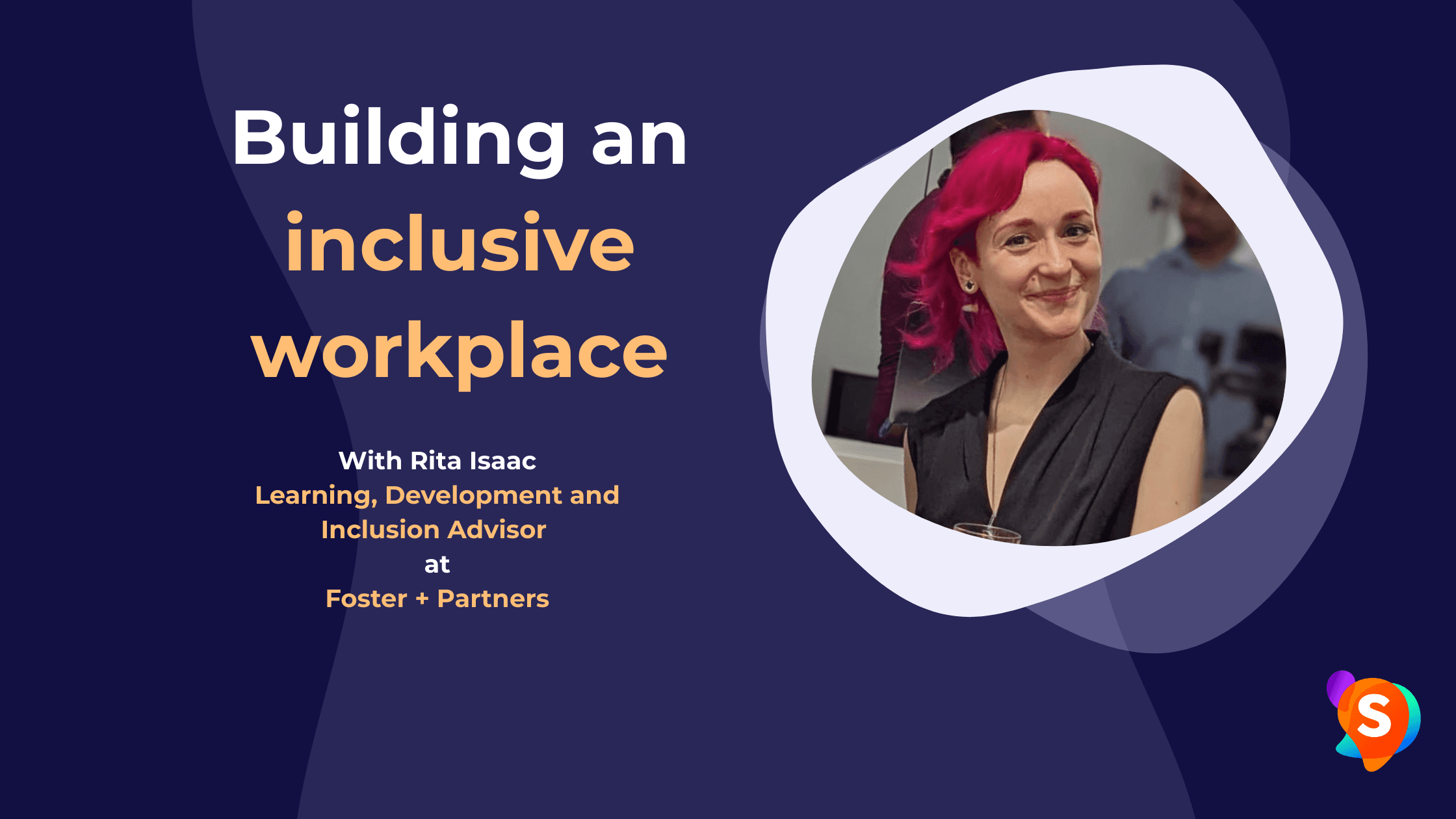
To explore that question, we spoke to Rita Isaac, Learning, Development and Inclusion Advisor at Foster + Partners - one of our earliest adopters and clients.
As a global architecture firm, Foster + Partners understands that building inclusive workplaces creates a better experience for all employees. We’ve worked with them for four years to create accessibility guides for their London campus, helping employees and visitors feel confident rather than anxious coming on-site to collaborate and learn.
How to build an inclusive workplace that retains Disabled talent
Why do you think businesses need to focus on building inclusive workplaces that retain Disabled talent?
Having a diverse workforce is a powerful tool for any organisation - research has repeatedly shown how inclusion boosts revenue and productivity. And that definitely starts at the early stages of the employee journey with inclusive recruitment and onboarding.
But, the possibilities created by those efforts are limited if we don’t help Disabled talent realise their full potential and rise to senior decision-making positions. Representation at the top matters. It’s those individuals who influence the organisation and build more inclusive systems and processes.
A common challenge for companies working across many sectors, not just the built environment, is Disability disclosure at work. Across organisations we know Disabled people hold senior positions, but many don’t feel safe or comfortable disclosing their Disability or access needs.
At its core, fostering and retaining Disabled talent means doing more than just creating accessible learning and development opportunities. It's about building an inclusive workplace culture where people feel safe to voice their accessibility needs.
That’s an important perspective. So often learning and development takes place outside of formal workshops and talks, during coffee chats with a mentor or asking your line manager for support when you’re struggling.
In your experience, what do you think are the main challenges to creating an accessible and inclusive workplace culture that fosters a sense of safety?
I think it really comes down to changing our approach from reactive to proactive.
Often organisations wait for people to disclose their Disability or flag that they have an access need before providing accommodations. This approach doesn’t always work. There is a widespread stigma around Disability in our society that means people are afraid to ask for an accommodation.
We also often expect Disabled people to know exactly what accommodations are available and what they need. Particularly if someone becomes Disabled or is diagnosed later in life they might not know what they can ask for or what might help.
The problem is doubly emphasised when line managers, senior managers and their peers don’t fully understand accessibility. Raising awareness about Disability through training and making it clear what accessibility features are available, supports managers and colleagues to proactively suggest solutions. Which takes the burden off the Disabled employee.
What are some ways Foster + Partners has created a more inclusive workplace that proactively fosters Disabled talent?
At a high level we’ve focused on building awareness around Disability and communicating the workplace accessibility features and accommodations available.
One of the ways we’ve done this is by partnering with Sociability to create access guides for four of our buildings, and we’re continuing to roll this out across our London campus.
Collaboration is key to our design process at Foster + Partners. Whether it be a client meeting or design review, we want everyone to be able to participate in on-the-job learning and feedback.
Sharing accessibility information through Sociability makes it easy for employees to see what facilities are available and find spaces where everyone is supported to collaborate. By simply filtering for certain accessibility features, non-Disabled coworkers can also play a more active role in workplace inclusion.
We’ve spoken a bit about informal learning and development opportunities but what about more targeted programs and workshops?
I’m very interested in how targeted learning and development offerings can be tailored to different access needs, and at Foster + Partners we offer talks, learning modules and workshops.
I think my two main pieces of advice for making formal learning opportunities accessible would be:
Create multiple, flexible options for engaging with learning opportunities; and
Engage neurodiverse stakeholders in your organisation when developing new initiatives to ensure lived experience is embedded from the start.
Flexible learning opportunities come up a lot when we talk about including neurodivergent individuals, and they benefit everyone. When employees have the autonomy to choose what works best for their learning style, they’re more likely to engage and absorb the information.
For instance, we provide learning materials in different formats - bitesize webinars, informal awareness events, self-service toolkits - and ensure digital accessibility across all of them with alt-text and closed captioning.
This focus on flexibility also applies to our in-person events. In December, we had a panel on inclusion in the workplace for International Day of Persons with Disability. Employees could partake both in-person and virtually. We also made sure the space was physically accessible with step-free with accessible toilets so that in-person participation was truly an option for everyone.
The other part is engaging neurodiverse stakeholders in your organisation from the start. I recently developed a neurodiversity awareness training module with inputs from our Disabilities Network and Inclusive Design experts. They gave us feedback during a focus group and follow-up pilot session. Because of their insights we could avoid making assumptions, and communicate clearly what they wish their peers knew about neurodiversity.
Thanks so much Rita! We can’t wait to see how Foster + Partners continues to lead the way in inclusive workplace culture.
This interview was published as part of our Beyond Compliance newsletter. If you want more insights from EDI and accessibility leaders who have successfully implemented change in their organisations subscribe here.
Sociability
Sociability is a disability-led social enterprise dedicated to making the world more accessible through accurate, verified data. Our team combines lived experience with technical expertise to help individuals and organisations navigate and improve accessibility information across the UK.