Originally published in 2024 | Last updated: April 2026 by Georgina Grogan
The transition into employment, or returning to a role after an injury, can be one of the most significant milestones in a disabled person's life. However, it often comes with a unique set of logistical and financial hurdles. In the United Kingdom, the Access to Work scheme exists to level the playing field, providing the support needed to ensure that a disability or health condition does not stand in the way of a career.
In this post, we explore what the scheme is, how it works in 2026, and a first-hand account from Ryan about how it helped him reclaim his independence.
What is the Access to Work Scheme?
The Access to Work scheme is a publicly funded employment support programme that aims to help disabled people start or stay in work. It provides practical and financial support to help you overcome barriers in the workplace that are not covered by an employer's duty to make "reasonable adjustments."
The scheme is available to those in paid employment, those about to start a job, and self-employed individuals who meet specific earning requirements. For the 2025/2026 period, the maximum annual grant is capped at £69,260, though the actual amount awarded is based on your specific individual needs.
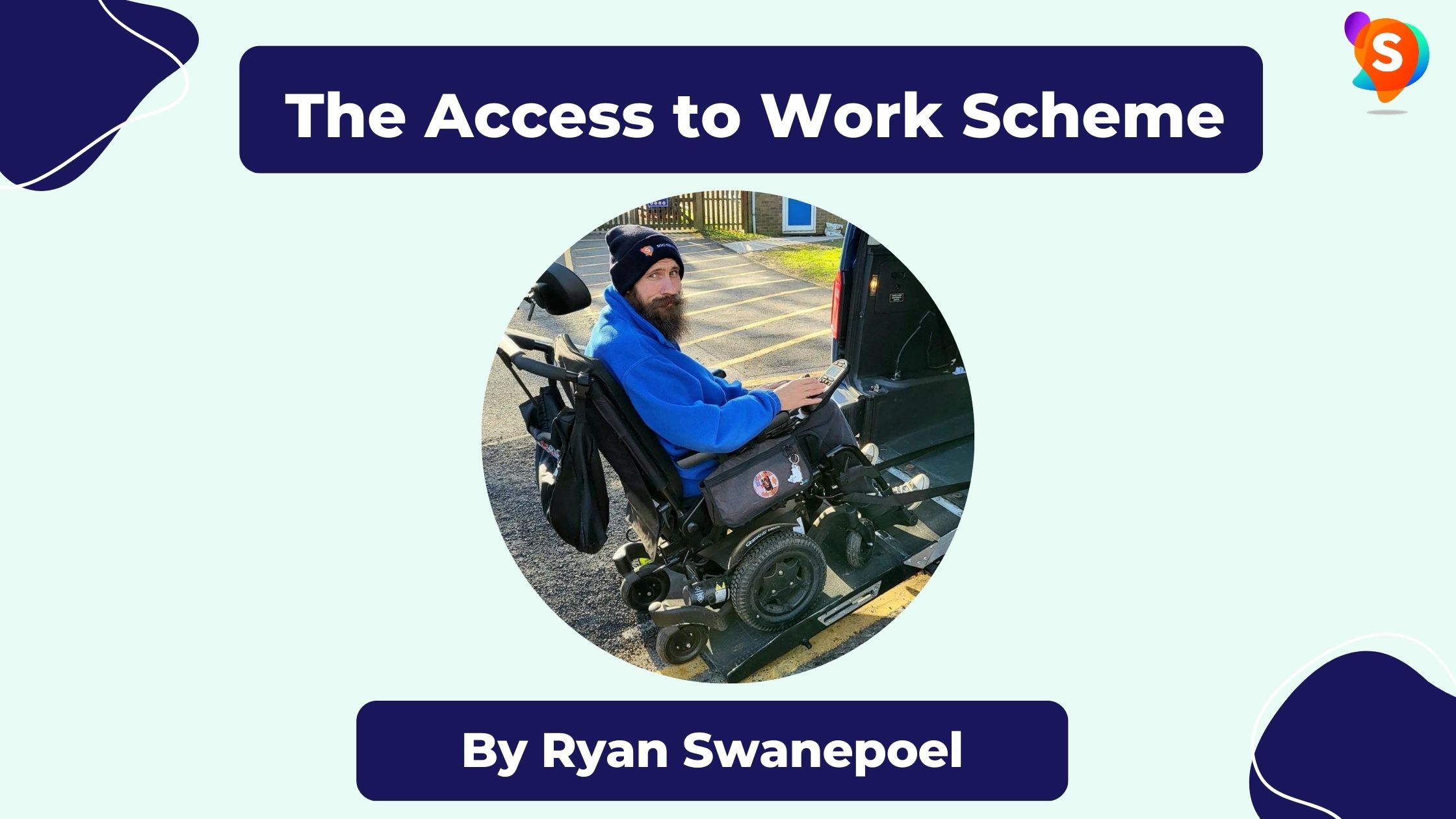
Ryan’s Story: Losing My Independence
I was in full-time employment working in a school for many years, trying to manage my lifelong condition of Muscular Dystrophy. I had a routine and a sense of purpose that I valued immensely. That was until I had an accident at work, which resulted in me falling and seriously breaking my hip.
What followed was my life being uprooted and flipped on its head. I had to leave the job I loved and found myself unemployed at home for the foreseeable future. I went from being fully independent to suddenly having to rely on people and equipment to help me through my day-to-day life.
I also had to stop driving as a safety measure. Along with this, I needed to organise an electric wheelchair through the Buckinghamshire wheelchair service to help me maintain some independence and safety while moving around. It was a complete minefield to navigate, and the process took a huge toll on my mental health. I felt trapped, vulnerable, and scared of navigating a world that suddenly felt very inaccessible.
Losing my independence
I was in full-time employment working in a school for many years, trying to manage my lifelong condition of having Muscular Dystrophy. That was until I had an accident at work, resulting in me falling and seriously breaking my hip in the process. What followed was my life being uprooted and flipped on its head, resulting in me leaving the job I loved and being unemployed at home for the foreseeable future.
I went from being fully independent, to suddenly having to rely on people and equipment to help me through my day-to-day life.
I also had to stop driving as a safety measure. As well as this, I needed to organise an electric wheelchair through Buckinghamshire wheelchair service, to help me maintain some independence and safety whilst moving around. It was a complete minefield to get my head around. Which in turn took a huge toll on my mental health.
felt trapped, vulnerable, and scared of navigating this new inaccessible world, having to rely on strangers I didn't know.
Getting My Freedom Back
Over time, I found my independence was slowly returning with every new piece of equipment I received. I could safely navigate my outside environment solo in my electric wheelchair, but one major problem remained. How would I travel back into the world without transport for my wheelchair?
I contacted Motability to get a Wheelchair Accessible Vehicle (WAV) order underway, but because I was mid-lease on my current vehicle, I knew the process would be long. That is when I came across the Access to Work scheme.
I discovered that the government could help with the costs and support needed to get people like me back into employment. I learned that they provide assistance with:
Specialist equipment and assistive software.
Support workers, such as BSL interpreters, job coaches, or travel buddies.
The costs of travelling to work if you cannot use public transport.
Adaptations to your vehicle so you can get to work.
Physical changes to your workplace.
This was the answer to my prayers. I contacted Access to Work and was assigned a caseworker who put everything into motion. My previous boss was overjoyed at the idea of me returning to the job I loved so much.

The Big Return
Everything was in place and I had my starting date ready to go. It was still a daunting thought, going back out into the wide world I once knew and navigated with ease. This time, I had to rely on people I did not know to help me navigate if I needed it. I was travelling to work without my wife, who is my full-time carer, and the nerves were high.
I chose a local taxi company that specialised in disabled transport. The drivers were fully trained in safeguarding and ensured I made my way safely into my property before they drove off. As soon as I met my driver, my anxiety went out the window. I felt confident in his training and quickly built a friendship with him.
Once I returned to work, my colleagues made me feel right at home. The children all remembered me and made me feel like I was back with a purpose. I have grown in confidence and have no problems asking for assistance when I need it. I have found ways of keeping myself independent in my job and navigating the outside world with total confidence.

Some final thoughts
When returning back into the workplace after an accident or disability, it is also your role and responsibility to make sure changes are made within the workplace to help keep you safe. We can't expect our employers to know exactly what should be in place, therefore using your initiative is vital.
Make sure there are foldable ramps in place if needed for fire escapes and entrances. Disabled toilets to be available to you if needed. Plus any equipment that needs moving from a higher level in order for you to access it at your preferred height. Think about all the things that would make your work life more comfortable.
Planning Your Own Return to Work
As Ryan’s story shows, the Access to Work scheme can be a lifeline. However, the process requires you to be proactive. If you are considering a return to work, here is how you can use the available tools to make it easier.
Use the Sociability App for Workplace Research
Before you even apply for a job or return to your old one, you can use the Sociability app to check the detailed access information for your workplace surrounding area. Knowing where the nearest accessible café is for a lunch meeting can significantly reduce your first-day nerves.
Understanding Your Employer's Role
While the Access to Work scheme provides the grant, your employer still has a legal duty under the Equality Act to provide "reasonable adjustments." This might include flexible working hours or changing your desk location. While the grant covers the "extra" costs, a truly accessible career also depends on the culture of the company. For more tips on what a supportive environment looks like, read our guide on how to build an inclusive workplace.
FAQ: Navigating the Access to Work Scheme
1. How do I apply for the grant?
You can apply online through the official GOV.UK Access to Work portal or by calling the Access to Work helpline. You will need your National Insurance number, your workplace address, and a contact person at your job who can confirm your employment details.
2. How long does the application take?
Currently, in early 2026, the DWP is seeing high demand. On average, applications are taking around 3 to 4 months to process. It is vital to apply as soon as you have a job offer or a start date to ensure your support is in place when you need it.
3. Will this affect my other benefits?
No. An Access to Work grant is not a "benefit" in the traditional sense; it is a grant to cover work-related costs. Receiving this support will not change your eligibility for Personal Independence Payment (PIP) or Universal Credit.
4. What if I am self-employed?
The scheme is fantastic for self-employed people. You can claim for support workers or equipment just like an employee, provided you meet the minimum earnings floor (which is currently £7,488 per year for 2026).
Taking the Lead
When returning to the workplace, it is also your responsibility to ensure changes are made to keep you safe. We cannot expect employers to know exactly what we need, so using your initiative is vital.
Ask for foldable ramps for fire escapes, ensure there is a disabled toilet available, and request that equipment is moved to a height you can reach. Think about everything that would make your work life more comfortable and dignified.
If you are considering returning to work, please research the Access to Work scheme. You will be surprised at the help available and how easy it can be to get your independence back and find your purpose again.
More details on the access to work scheme can be found here Access to Work: factsheet for customers
We would love to hear your thoughts on this post.
Planning a trip? Download the Sociability app to find accessible cafés, bars, and restaurants that meet your specific needs in seconds. You can also join our community and follow us on Instagram for the latest inclusive spots!
To take your advocacy further, sign up for our free newsletter, Beyond Compliance. We provide practical tips to help you champion accessibility in your workplace and everyday life. We look forward to seeing you there!
Sociability
Sociability is a disability-led social enterprise dedicated to making the world more accessible through accurate, verified data. Our team combines lived experience with technical expertise to help individuals and organisations navigate and improve accessibility information across the UK.