Originally published in 2022 | Last updated: April 2026 by Georgina Grogan
At Sociability, we believe that those closest to a problem are the best equipped to build the solution. This philosophy is the heartbeat of a disabled-led start-up.
Over the years, we have welcomed many talented individuals into our team who wanted to see how a social impact business operates from the inside. One such person was Mateo, a former intern who joined us for two consecutive summers. As a non-disabled person entering a disability-focused tech space, Mateo gained a unique perspective on why the start-up world is the ultimate training ground for innovation, empathy, and professional growth.
If you are considering your next career move, here are 5 reasons why joining a disabled-led start-up could be the most rewarding decision you make.
Here’s Mateo’s thoughts on why you should join a disabled-led start up like Sociability…
After finishing my third year at university, I was happy to re-join the Sociability team as a summer intern between May and July. Throughout these three months, I was able to get further understanding of how a small company operates, whilst having responsibilities in very different aspects. This has resulted in me having a better idea of where I would like to focus on post-graduation. There are so many benefits to joining a disabled-led start up and here’s just a few of those…
1. High-Paced, Purpose-Driven Growth
Start-ups move fast. Projects evolve on a weekly, if not daily, basis. This pace gives a constant feeling of accomplishment because you can see your contributions directly impacting the success of the business. In a disabled-led start-up, every project is linked to removing real-world barriers for millions of people. No matter your level of experience, your work has a clear and immediate purpose.
No matter your level of experience, your work has a clear and immediate purpose. You can read more about the real-world impact of our mission in our blog post on what the Sociability app means to our community.
2. A Masterclass in Problem Solving
Start-ups exist to solve problems that currently have no solution, or at least not one that is "good enough." Working in a disabled-led start-up puts you at the forefront of inclusive innovation.
Reflecting on his time with us, Mateo highlighted a powerful quote: "Just because you do not experience a problem yourself, it does not mean that the problem is not worth solving." By working alongside disabled leaders, you learn to see the world through a lens of universal design, creating products that work better for everyone, not just the majority.
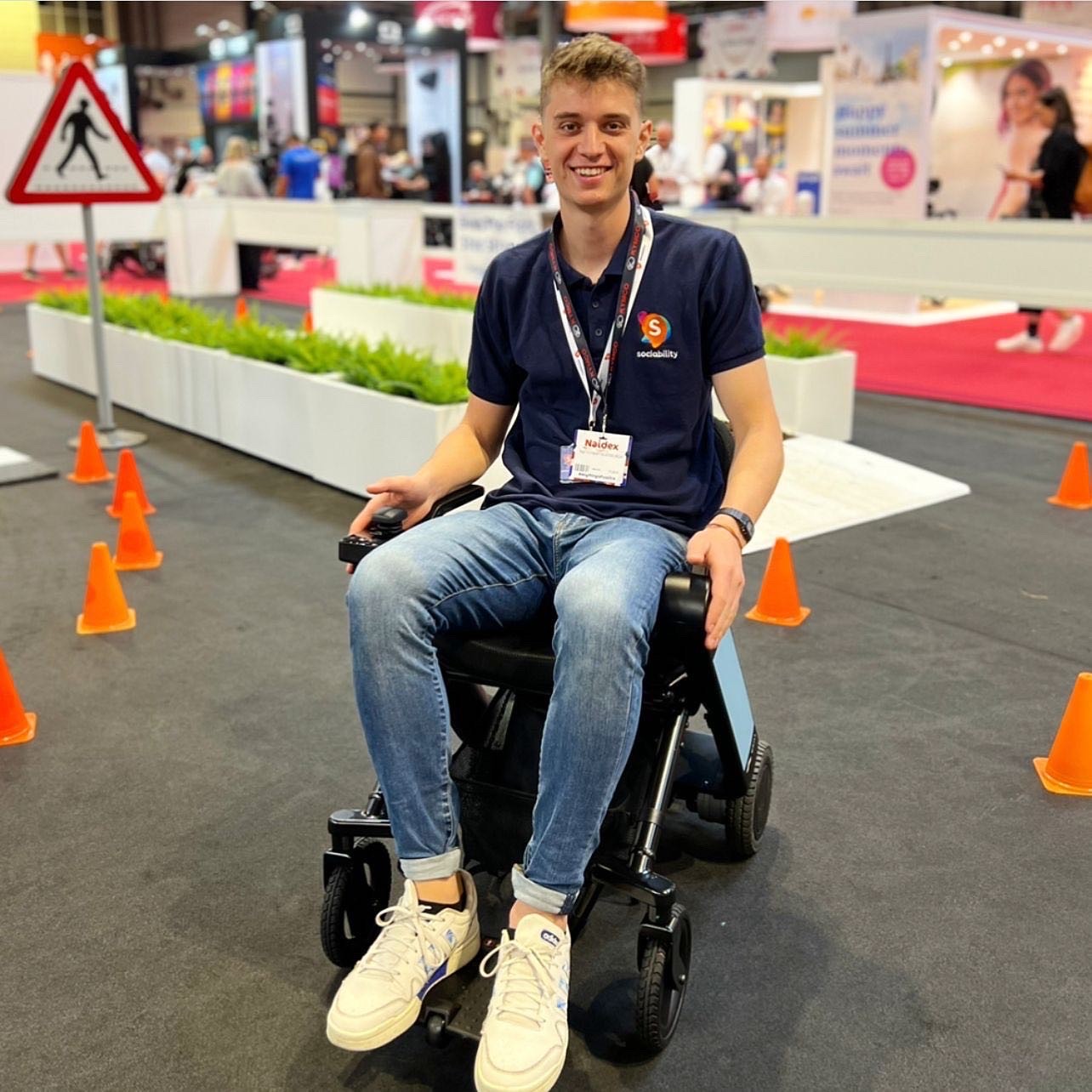
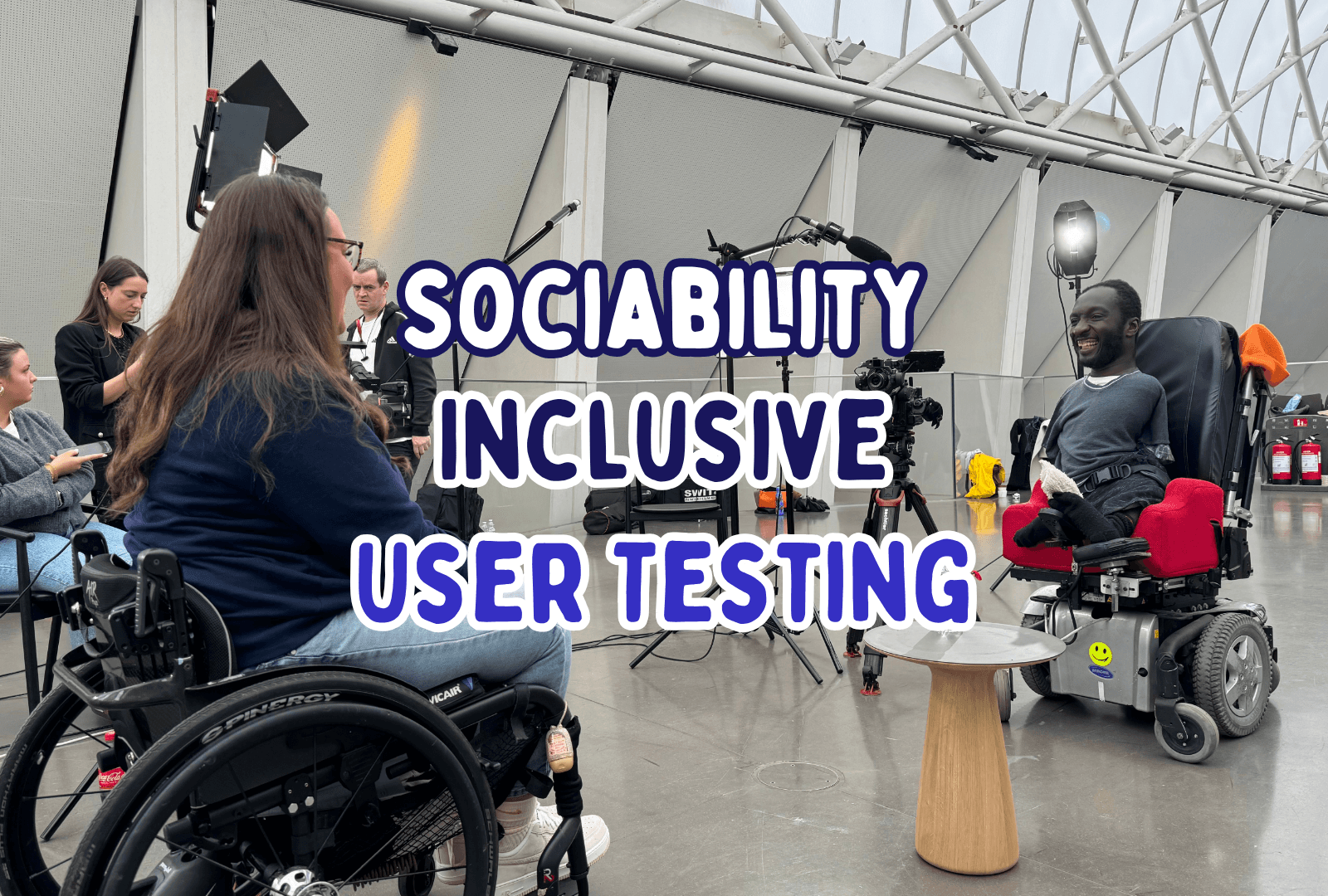
Mateo testing out a wheelchair!
3. Radical Inclusivity and Culture
A disabled-led start-up naturally fosters a culture of flexibility, empathy, and direct communication. There is no "typical" way to work: there is only the way that gets the job done most effectively for the team.
Mateo found that working alongside disabled colleagues daily quickly dispelled any myths about disability. He noted that there is no difference in social interaction or workflow, but the exposure broadened his mindset beyond what a traditional, non-disabled-led company could offer. It opens your eyes to circumstances and issues you may never have considered before.
4. Unrivalled Skill Diversification
In a small team, you wear many hats. During his 3 months at Sociability, Mateo took part in interviews for new roles, witnessed customer acquisitions, and looked into future investment opportunities.
In a disabled-led start-up, you are not siloed into one department. You gain a holistic understanding of how a business operates, which is invaluable for your professional development. It helps you discover which areas of tech, design, or social impact you are most passionate about for your future career.
5. A New Perspective
For many non-disabled people, working for a disabled-led start-up might not be the first career path that comes to mind. If you have no personal experience with disability, making that leap can even feel a bit daunting. However, our former interns have consistently found that this exposure is exactly what broadens their professional mindset.
Looking back on his experience, Mateo was convinced of two key things:
Shared Workflow: Disabled people work in the same way as non-disabled people. There is no difference in social interaction or professional workflow. Interacting with disabled colleagues on a daily basis allows you to look beyond the disability and gain a true understanding of who your teammates are as individuals.
Broadened Mindset: Being exposed to disability early in your career opens your eyes to circumstances and issues you may never have been aware of. It forces you to consider a much larger part of society in everything you build.
Throughout his time at Sociability, Mateo frequently returned to a core belief: "Just because you do not experience a problem yourself, it does not mean that the problem is not worth solving."
Start-ups are intended to solve problems that are currently being ignored. Even if those problems are not strictly applicable to your own life, that does not mean they are not worth fixing. The moment you are exposed to these situations and the people who experience them daily, the mission becomes personal. Even if you do not face these barriers yourself, you become committed to solving them for the wider community and for the friends you make along the way.
Final Reflections
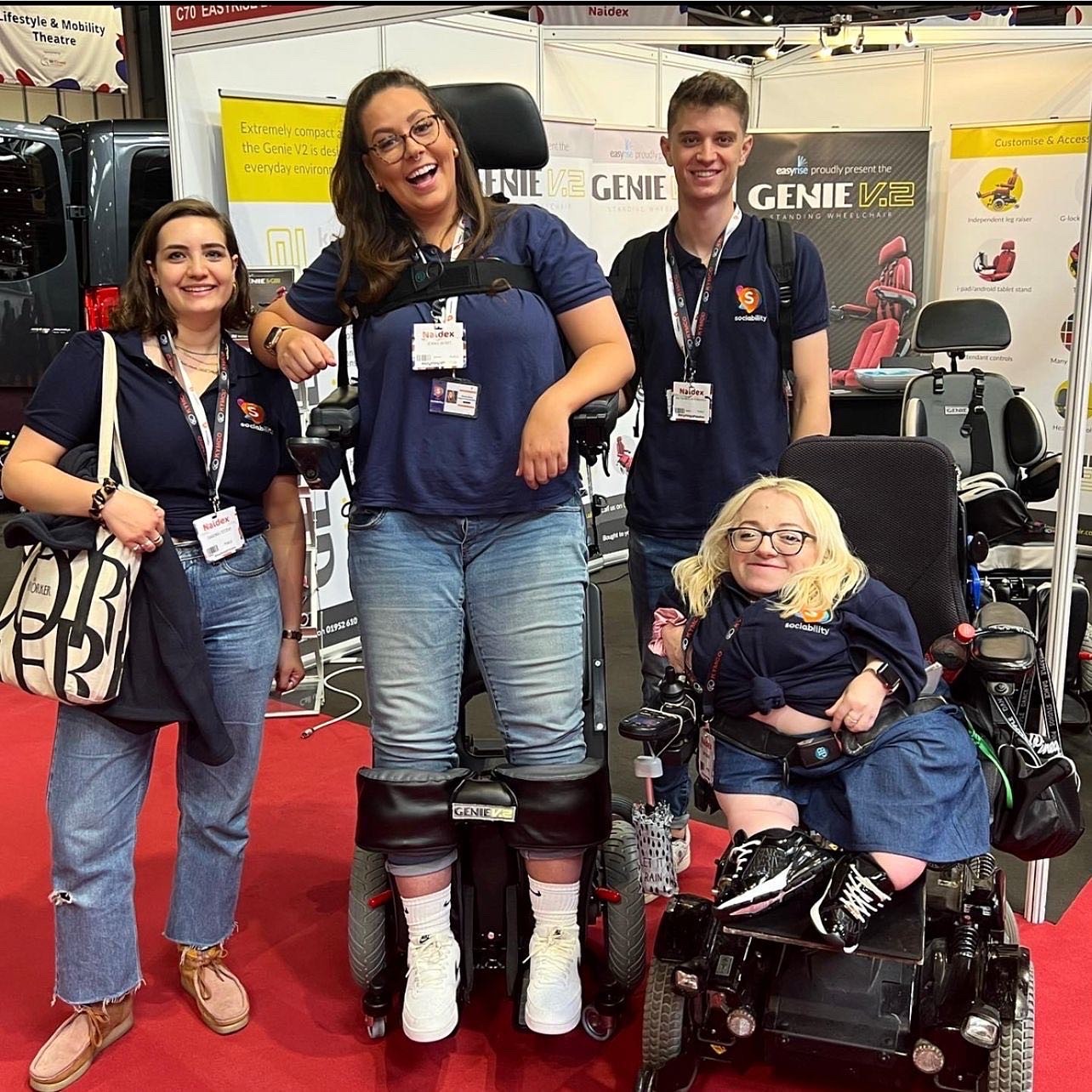
Left to right: Isadora, Jennie, Mateo and Gem
FAQ: Working for a Disabled-Led Start-up
1. Do I need experience in the disability sector to apply?
Not necessarily. While a passion for accessibility is vital, many people join a disabled-led start-up with skills in software engineering, marketing, or design. As our former interns have shared, the most important trait is a willingness to learn and an open mind toward solving problems you may not face personally.
2. Are disabled-led start-ups only for disabled employees?
Absolutely not. Inclusion is about everyone being in the room. A disabled-led start-up thrives on a diverse team where disabled and non-disabled people collaborate. This mix of perspectives is exactly what leads to the most robust and creative solutions for the wider community.
3. How does the "social impact" aspect affect the business?
Being a social impact business provides a massive competitive edge. Because the mission is so clear, the team is usually more motivated and the customer base is more loyal. You are not just building a product: you are building a more inclusive world, which makes the hard work of a start-up feel incredibly worthwhile. To see more examples of people and businesses driving this kind of change, take a look at the inspiring nominees for the Scope Awards 2026.
Huge thank you to Mateo for sharing his journey and thoughts about working with Sociability!
We would love to hear your thoughts on this post.
Planning a trip? Download the Sociability app to find accessible cafés, bars, and restaurants that meet your specific needs in seconds. You can also join our community and follow us on Instagram for the latest inclusive spots!
To take your advocacy further, sign up for our free newsletter, Beyond Compliance. We provide practical tips to help you champion accessibility in your workplace and everyday life. We look forward to seeing you there!
Sociability
Sociability is a disability-led social enterprise dedicated to making the world more accessible through accurate, verified data. Our team combines lived experience with technical expertise to help individuals and organisations navigate and improve accessibility information across the UK.